
Series
FACE Talks: Fostering Antiracist Conversations and Engagement – Fall 2026

Date
October 30 – December 11, 2026
Times
October 30: 9:30 am-12:00 pm
November 6: 9:30 am-12:00 pm
November 13: 9:30 am-12:00 pm
November 20: 9:30 am-12:00 pm
December 4: 9:30 am-12:00 pm
December 11: 9:30 am-12:00 pm
Expanding Our Capacity for Honest, Courageous, and Compassionate Dialogue
Online through Zoom
Many of us long to speak about racism and harm with clarity and integrity while staying connected to the people we care about. Yet when the moment arrives, we often find ourselves pulled in different directions. Our bodies tighten. Our thoughts race. We become quiet or defensive, uncertain how to move forward without causing further hurt or losing ourselves. These experiences can quietly erode trust in our own voice and make it harder to step into the conversations we know matter.
FACE Talks was created to meet this place with steadiness and encouragement. It offers a way to strengthen the inner capacities and relational skills that help us remain present and grounded when conversations carry emotional or historical weight. Together, we explore what it means to stay connected to our values, to speak our truth with care, and to build the courage to stay engaged long enough for understanding or repair to become possible.
This course is not about striving for perfection. It is about reclaiming our ability to be fully human with one another, to hold truth and connection at the same time, and to move through difficult moments in a way that aligns with our deepest commitments.
What FACE Talks Is
FACE Talks is a six-week, live, practice-centered program that gives you a structured and compassionate approach to engaging in conversations about racism. You will learn to prepare yourself internally, to speak your experience in ways that honor both clarity and connection, and to listen in ways that help others feel understood without abandoning your own truth.
Throughout our time together, we explore:
- how to identify what is happening internally before you speak
- how to distinguish between intention and impact
- how to express harm in ways that invite understanding
- how to stay grounded when someone has feedback for you
- how to recognize when systemic patterns are shaping the moment
- how to listen with presence rather than pressure or fear
The course provides a structure that supports clarity and relational courage, while leaving room for your authentic voice to emerge.
Why FACE Talks Is Different
Many programs offer information about racism. FACE Talks offers guided practice, steady support, and a clear framework for navigating conversations that often feel overwhelming. The course helps you slow down enough to recognize the emotional, relational, and systemic layers present in any moment of tension. You will learn a conversational pathway that supports expression, understanding, and the possibility of healing or meaningful action.
People often share that this framework gives them a sense of direction in moments that once felt impossible to navigate. It becomes a way of orienting themselves around their values even when emotions rise or when the path forward is not immediately clear.
The course is built around two interconnected frameworks that run through all six sessions. The first is the Authentic Dialogue Tree: a map of four distinct dialogue types — being heard, shared understanding, healing, and solution — that helps you identify what a conversation actually needs, and sequence those needs honestly. The second is the five connection blocks: habits of mind that disrupt understanding even when both people are trying. Naming these patterns in yourself and in the room is often the first moment of real traction in a difficult conversation.
The course also attends directly to how emotional labor is distributed in antiracist dialogue. There is a pattern, common even in well-intentioned spaces, where the person who has experienced racial harm ends up caring for the distress of the person who caused it. FACE Talks names this pattern clearly and gives participants practical tools for redirecting it. Global Majority participants are supported in protecting their energy and declining labor that is not theirs to carry. White participants are supported in developing the capacity to stay with impact and process their own emotional responses outside of the conversation, rather than turning them into an implicit demand on the people they have affected.
FACE Talks holds honesty and dignity together. It supports people who have experienced racial harm. It supports people who are learning how to respond with accountability when their actions have caused harm. And it supports everyone in building the capacity to engage with one another in ways that are aligned with the vision of Beloved Community.
Who FACE Talks Is For
FACE Talks welcomes participants with a wide range of lived experience, familiarity with conversations about race, and levels of comfort with dialogue. You may resonate with this space if you are:
- new to Nonviolent Communication and wanting practical, accessible tools that help you navigate conversations that feel emotionally charged or confusing
- someone who hesitates to speak up because you worry about making things worse, or who longs to address harmful behavior without escalating the moment or losing connection
- a white-identifying participant seeking to build the groundedness and resilience needed to receive feedback without defensiveness, collapse, or asking others to take care of your feelings
- a Global Majority participant wanting a space that honors your lived experience, supports your clarity and voice, and does not require you to minimize yourself in order to maintain harmony
- someone who values justice, belonging, and accountability, and wants a structured approach to conversations that allows you to stay connected to your purpose even when tension rises
- an NVC practitioner who has noticed that the tools feel different or harder to access when conversations involve racism, structural power, or historical pain, and who wants to integrate the heart of NVC with a deeper understanding of systemic impact, internalized patterns, and the emotional terrain of antiracist dialogue so that your practice aligns more fully with your values in the moments that matter most
- a person who longs for conversations that make repair possible and who wants to build the courage, clarity, and steadiness needed to stay engaged even when the path forward is not immediately clear
FACE Talks meets you with respect for your starting point and supports your growth toward the kind of presence and capacity these conversations call forth.
Who This Program May Not Be For
FACE Talks may not be a good fit for people who:
- want to avoid any discomfort or reflection
- prefer to debate whether systemic racism exists
- seek quick fixes without engaging inner work
- want surface-level harmony at the expense of truth
- are unwilling to examine the impact of their behavior
- do not want to participate in guided dialogue practice
This course supports growth and accountability. It does not center comfort or avoidance.
What You Will Learn
Over six weeks, you will develop foundational skills that help you show up to conversations about racism with clarity, steadiness, and compassion. You will learn how to understand your reactions, speak truthfully, and connect across difference without minimizing impact or losing yourself.
You will learn how to:
- pause, sort what is actually happening, and make a conscious choice about whether and how to engage
- distinguish between external, internal, and systemic observations, and understand why all three matter in conversations about racial harm
- name what happened clearly, without blame or collapse
- identify which of five connection blocks is disrupting understanding, and choose a different path
- recognize which type of dialogue the moment calls for (being heard, building shared understanding, healing, or moving toward solution) and stay oriented toward that purpose even when emotions rise
- express the impact of harm, including its systemic dimensions, in ways that invite understanding rather than defensiveness
- witness someone else’s pain as an actor, setting aside your own guilt or defensiveness so that repair can actually begin
- use empathy and redirection to keep a conversation on track when it starts to crash
- make specific requests that invite partnership rather than pressure
- protect your energy and set limits on the emotional labor you take on, without abandoning the conversation or the relationship
These skills help you move through conversations about racism with more spaciousness and alignment.
How We Will Learn Together
FACE Talks is rooted in experiential learning. The course offers:
- reflective teaching to support deeper awareness
- demonstrations that show the skills in real conversations
- small-group practice that builds confidence and capacity
- guided reflection that integrates learning
- community discussion that honors multiple perspectives while staying oriented toward dignity and connection
This structure supports real growth by anchoring intellectual understanding in embodied experience.
A Space Designed for Dignity, Accountability, and Care
Conversations about racism exist within personal, historical, and systemic contexts. The space created in FACE Talks honors this reality with clear agreements that support the well-being and dignity of all participants. The course centers the needs and experiences of Global Majority participants and supports white participants in developing the capacity to engage with impact, accountability, and relational presence.
The intention is not to remove all discomfort but to create a container strong enough to hold it so that honest conversation becomes possible and repair can emerge.
Breakout Group Options for Global Majority Participants
- We acknowledge the unique challenges encountered by Global Majority people when engaging in this type of work in spaces that tend to be white dominant. These can include being asked to educate white participants about racism, discrimination, and social justice issues, being seen and treated as representatives of their entire race or ethnicity rather than being seen as individuals, and experiencing microaggressions such as having their opinions or experiences dismissed or minimized.
- Given that skills practice in breakout groups is a major component of this course, we want Global Majority participants to have choice about their group make-up when practicing this work.
- One strategy we will implement to support choice for Global Majority participants in this class is to offer the choice of opting into breakout groups that are for Global Majority people only.
About Your Guide

I am Dr. Roxy Manning, a clinical psychologist, Certified Trainer with the Center for Nonviolent Communication, and the author of How to Have Antiracist Conversations and The Antiracist Heart. My work is grounded in the belief that truth and humanity are not opposing forces but partners in building a more just and connected world. Over the last two decades, I have supported individuals, families, organizations, and communities in navigating conversations about race, power, and belonging. FACE Talks brings together the frameworks, practices, and relational wisdom that I have seen open pathways to understanding, healing, and meaningful change.
Course Details
FACE Talks Fall 2026
Class meets 9:30-12:00pm PT (find your local time) on the following dates:
- Session 1 – Friday, October 30
- Session 2 – Friday, November 6
- Session 3 – Friday, November 13
- Session 4 – Friday, November 20
- No class on November 27 (holiday break)
- Session 5 – Friday, December 4
- Session 6 – Friday, December 11
- Live on Zoom
Teaching segments are recorded. Practice spaces are not recorded to protect privacy and presence.
Sliding Scale Tuition Options:
Tuition for the 6-Week Course
- $800 – Supporter Rate: If you have financial assets, or identify as middle or upper/owning class, then this is the rate for you. Paying at this rate supports the discount and scholarship fund, making this course accessible to more people including Global Majority people.
- $700 – Support Roxy’s Sustainability Rate: If you are able to contribute at this level, you contribute to more spaciousness for Roxy to continue to develop and expand her ideas and work – activities that are not paid through classes or workshops.
- $550 – Requested Standard Contribution: This is the true cost of the course. If you are able to pay this amount and still meet your basic needs, then this is the price for you to choose.
- $450 – Discounted Rate: The Discounted option is reserved for those who sometimes struggle with limited financial resources and would benefit from supported access to this learning experience.
- $300 – Scholarship Rate: The Scholarship option is reserved for people experiencing financial hardship.
If you are a member of the Global Majority or experiencing financial hardship and you need additional financial assistance to attend, please submit a request for tuition assistance.
RegisterPLEASE NOTE:
- Your tuition payment is non-refundable and transferable.
- In the event that the course is postponed or canceled a full refund of tuition will be offered.
- This work is not therapy and is not a substitute for therapy. If you have a sense that you would be destabilized by yourself or others speaking about difficult events, then this course may not be for you. While we hope that the processes and information that we share can be of use in your journey, we do not have the resources to support extreme psychological difficulties.
Join Us
If you are longing to grow your capacity to speak truthfully about race without losing connection, if you want to deepen your resilience and presence in moments that once felt overwhelming, or if you are seeking a community committed to practicing the values of Beloved Community, I would be honored to welcome you into FACE Talks.
This work invites us to show up with more alignment, more courage, and more compassion — both for ourselves and for the people with whom we walk through this life.
You are welcome in this space.
Share Event


Related Events

July 9 – 30, 2026
10:30am - 12:30pm Pacific Time
Join Roxy for this 4-week online course. - Explore several essential components of facilitation using caring for all, power-with lens - Identify and gather together the people who need to be in the room - Learn tips and strategies for ensuring all voices are heard - Grow your capacity to name and address power dynamics and unconscious bias that impact group members’ experience
September 19, 2026 – April 18, 2027
One weekend, monthly
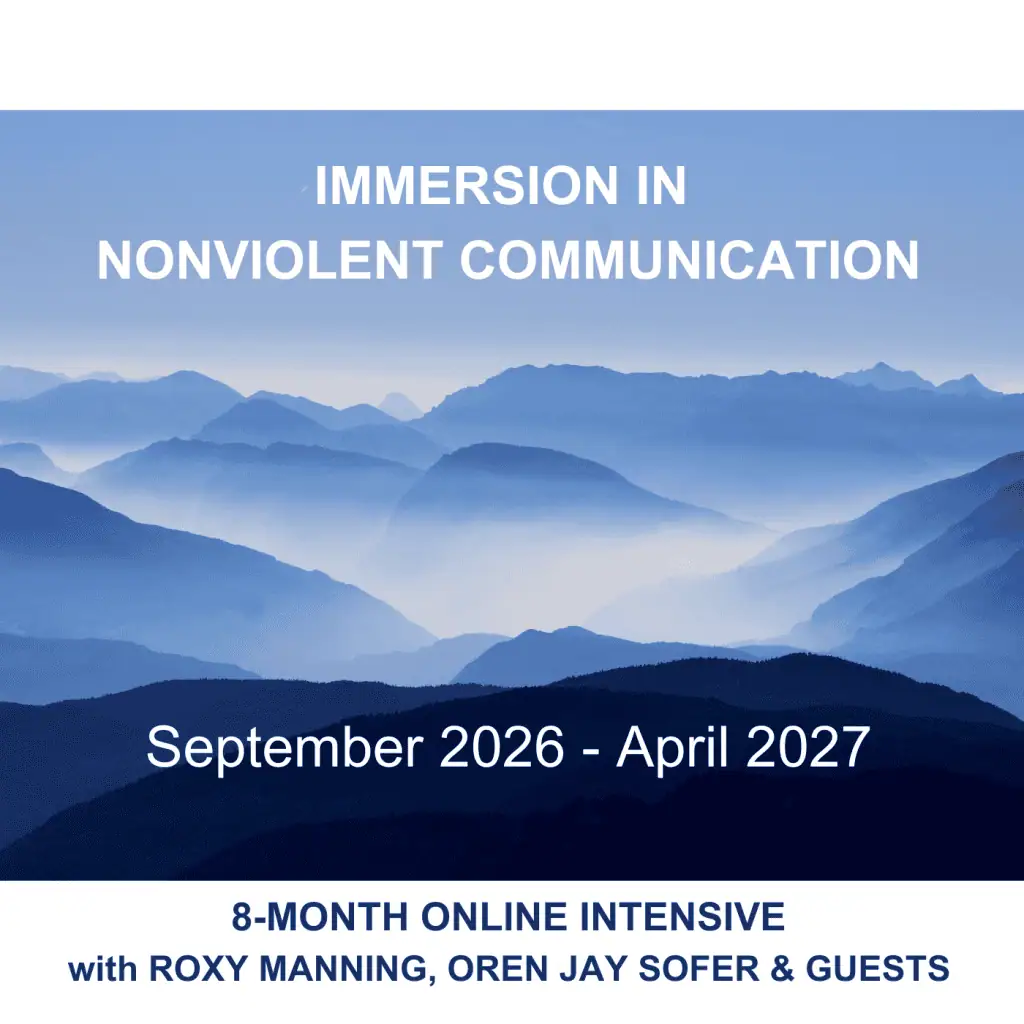
The Immersion in Nonviolent Communication (“IN” for short) will deepen your understanding and embodiment of key principles of NVC. IN’s core training spans eight monthly weekend workshops, with multiple other components to encourage practice and integration throughout the program.

Join us for this special, four-day online retreat exploring NVC as an embodied practice for transforming our lives, relationships, and world. The tools of Nonviolent Communication (NVC) can support us with skills to navigate challenging situations with loved ones, in hierarchical workplace settings, and during these challenging times of great change. With training, we can learn to stay balanced and make a difference for everyone whose lives we touch.